

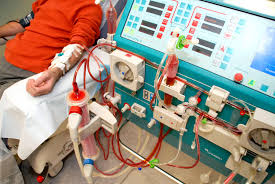
Kidney patients battle for survival as dialysis costs hit N600,000 monthly
Nephrologists in Nigeria are raising the alarm as the cost of life-saving dialysis has reached a staggering N600,000 per month for many patients. This surge is being driven by the high cost of imported medical consumables and the current exchange rate volatility.
Here is a breakdown of the current crisis facing renal patients in Nigeria as of March 24, 2026:
The Financial Burden
Per Session Cost: A single dialysis session in private and many public facilities now costs between N50,000 and N100,000.
Monthly Totals: Patients with end-stage renal disease typically require three sessions per week. At an average of N50,000 per session, the weekly cost is N150,000, totaling roughly N600,000 monthly.
Transplant Costs: For those seeking a permanent cure, kidney transplants in Nigeria now range between N25 million and N30 million, up significantly from previous years.
The Subsidy Gap
While the Federal Government previously announced a landmark subsidy to reduce the cost of dialysis to N12,000 at selected federal tertiary hospitals (such as LUTH in Lagos and National Hospital in Abuja), patients and doctors report several challenges:
Partial Relief: The N12,000 fee often covers only the "procedure," while patients still must pay out-of-pocket for essential consumables like dialyzers, bloodlines, and heparin.
Limited Access: There are only about 354 functional dialysis machines in the country for an estimated 25 million people living with some form of kidney disease.
Insurance Limitations: The National Health Insurance Authority (NHIA) package currently covers only six dialysis sessions per year, leaving patients to self-fund the remaining 144+ sessions needed annually.
Expert Warnings
Prof. Jacob Awobusuyi, President of the Nigerian Association of Nephrology, and other specialists have warned that 95% of Nigerians with chronic kidney disease die annually because they cannot afford treatment. Many families are reportedly selling off assets or borrowing from banks, only to eventually abandon treatment due to "catastrophic health expenditure."
The Federal Government has designated 11 federal tertiary health institutions as pilot centers for the N12,000 subsidized dialysis sessions (down from the previous average of N50,000).
As of today, March 24, 2026, the subsidy is operational in the following facilities across the six geopolitical zones:
List of Participating Federal Hospitals
Abubakar Tafawa Balewa University Teaching Hospital (ATBUTH), Bauchi (First to launch)
National Hospital, Abuja
Lagos University Teaching Hospital (LUTH), Idi-Araba, Lagos
University College Hospital (UCH), Ibadan
Aminu Kano Teaching Hospital (AKTH), Kano
University of Maiduguri Teaching Hospital (UMTH), Borno
University of Benin Teaching Hospital (UBTH), Edo
Federal Medical Centre (FMC), Ebute-Metta, Lagos
Federal Medical Centre (FMC), Jabi, Abuja
Federal University Teaching Hospital, Owerri (formerly FMC Owerri)
Federal Medical Centre (FMC), Azare, Bauchi State
Important Notes for Patients
Expansion Plans: The Ministry of Health has indicated that the program will be scaled up to include additional Federal Medical Centres and Teaching Hospitals before the end of the year to improve nationwide coverage.
Hidden Costs: While the "procedure" is capped at N12,000, recent reports from patients at UCH and National Hospital suggest that some families are still paying out-of-pocket for consumables (like dialyzers, bloodlines, and heparin) if the hospital's current stock is low.
Verification: It is highly recommended that patients confirm the availability of subsidized slots directly at the Renal Unit of these hospitals, as demand is currently extremely high, often leading to waitlists.