
Businesses brace for inflation surge as petrol hits N1,300/ltr
In March 2026, the Nigerian economy has been hit by a significant fuel price surge, with petrol (PMS) prices reaching N1,300 per litre in several parts of the country. This spike, driven by global crude oil volatility and domestic refinery price adjustments, has triggered widespread alarm across the Organised Private Sector (OPS).
Current Pricing Reality
The surge follows a series of rapid price hikes by the Dangote Petroleum Refinery.
Refinery Price: On March 9, 2026, the refinery raised its gantry price to N1,175 per litre—the fourth revision in a single week.
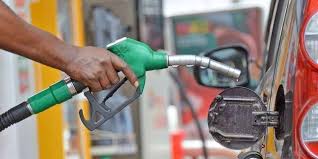
Retail Market: Pump prices in cities like Ibadan and parts of Lagos have hit the N1,300 mark, while some outlets in Abuja and other northern regions report prices as high as N1,400.
Other Fuels: Diesel (AGO) has also climbed, selling for roughly N1,620 per litre, with analysts warning it could approach N3,000 if global tensions persist.
Impact on Businesses
The Nigerian business community is bracing for what many describe as an "inflationary nightmare." Key sectors are reacting as follows:
Logistics & Distribution: The Lagos Chamber of Commerce and Industry (LCCI) warned that the immediate impact is visible in rising freight costs. This creates a "pass-through" effect where transport companies increase fares, which then drives up the cost of food and consumer goods.
Manufacturing: Manufacturers are facing a "double blow"—higher costs to fuel generators for production and higher costs to move finished products to market.
Budget Scrambling: Small and medium enterprises (SMEs) are being forced to choose between slashing margins or raising prices, which risks lower sales as consumer purchasing power dwindles.
Why Prices Are Rising
The spike is attributed to several interconnected factors:
Global Volatility: Escalating conflict in the Middle East and the emergence of new leadership in Iran have pushed international crude prices toward $110 per barrel.
Replacement Cost Pricing: Local refineries and marketers are adjusting prices based on the "replacement cost"—the cost of buying new crude or products in the current market—rather than what was paid for existing stock.
Deregulated Market: Under the current policy, prices are no longer fixed by the government but fluctuate according to global market fundamentals.
Economic Outlook
The Central Bank’s progress in taming inflation (which had dropped to 15.1% in early 2026) is now under threat. Experts suggest that if the current trend continues, petrol could potentially hit N2,000 per litre by mid-year, which would likely reverse the recent disinflationary gains.
To combat the economic strain caused by petrol hitting N1,300 per litre, the Federal Government has intensified several existing intervention programs and introduced new fiscal measures as of March 2026.
The strategy focuses on providing low-interest capital to businesses and accelerating the shift to cheaper energy alternatives.
1. MSME Intervention Loan (Expanded)
The Federal Government, through the Bank of Industry (BOI), has significantly scaled up the Presidential Intervention Fund.
Increased Loan Cap: The maximum loan amount for a single MSME has been increased from N1 million to N5 million.
Fixed Low Interest: The rate remains at 9% per annum, which is a sharp contrast to commercial bank rates that have soared alongside inflation.
Flexible Repayment: Loans are structured over a three-year term with a three-month grace period before repayment starts, specifically intended to help businesses manage the immediate cash flow shock of high fuel costs.
2. Accelerated CNG (Compressed Natural Gas) Rollout
The Presidential CNG Initiative (PiCNG) is the government’s primary long-term tool to lower logistics costs, as CNG currently costs roughly one-third the price of petrol.
Conversion Subsidies: The government is prioritizing subsidized vehicle retrofits for commercial buses, trucks, and tricycles to bring down transport fares and food distribution costs.
Infrastructure Expansion: New CNG refueling stations were recently commissioned at major hubs (like the facility at OAU in Ile-Ife) as part of a plan to deploy 500 stations nationwide by 2028.
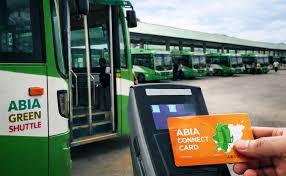
Direct Bus Distribution: Hundreds of CNG-powered buses are being distributed to labor and student unions to mitigate the rising cost of public commuting.
3. Tax Harmonization & Relief
To prevent "multiple taxation" from killing off struggling businesses, the government is pushing a National Tax Harmonization Agenda.
Levy Reductions: The administration is working with state governments to eliminate overlapping taxes and fees on basic consumption goods.
Fiscal Space: In the 2026 Appropriation Bill, the government emphasized shifting focus from aggressive taxing to broadening the "fiscal space" by supporting productive investment in infrastructure.
4. Monetary Policy & Food Palliatives
Inflation Targeting: Despite the fuel hike, the CBN is maintaining an orthodox monetary policy to keep the naira stable, aiming to push headline inflation back down (it had reached 15.1% in early 2026 before this current surge).
Emergency Distribution: State governments have begun distributing food palliatives to vulnerable populations to counter the immediate "food inflation" triggered by the N1,300 petrol price.